
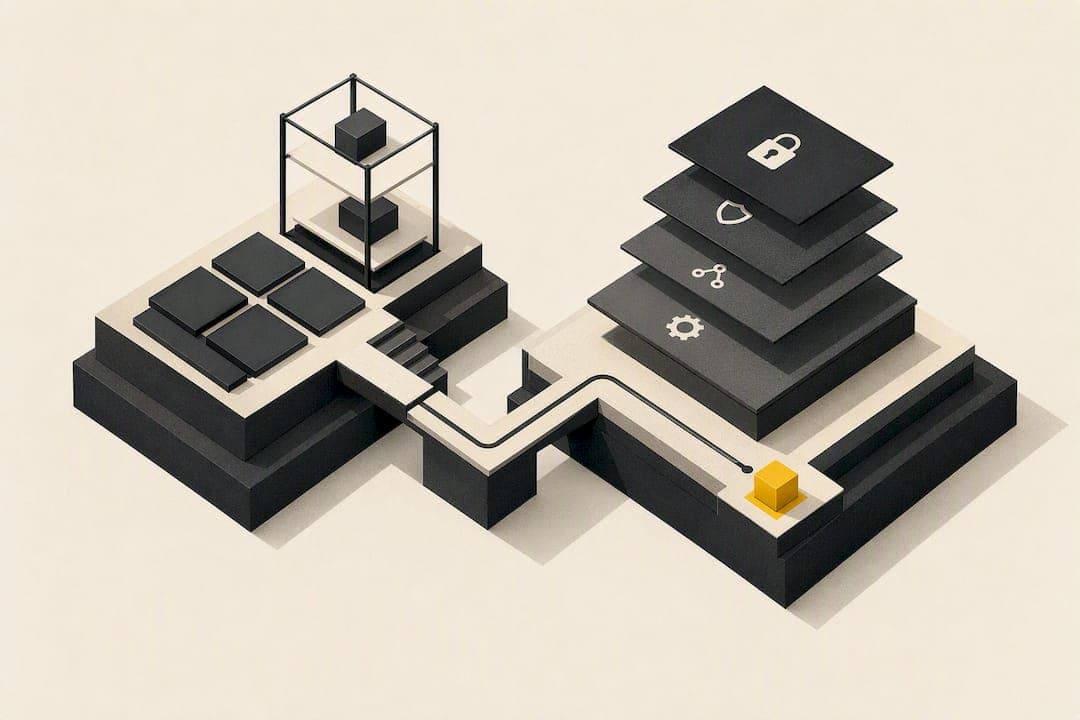
Ship six artifacts: an architecture diagram, a dependency and license report, a security posture summary, an IP assignment ledger, CI/CD and test coverage evidence, and a runbook with rehearsed walkthrough notes. Budget a reasonable preparation period to produce all six before the data room opens. The goal isn't a perfect codebase. It's a repo a stranger can read in ten minutes, with ownership nobody can dispute.
TL;DR:
- An IP assignment ledger with signed contributor agreements is the most critical artifact to prevent ownership disputes that can halt a review.
- A dependency and license report should be triaged into a concise table highlighting critical CVEs, abandoned packages, and license flags, not raw scan outputs.
- Focus on detailed documentation of core flows such as authentication and payments, including a clear deployment and rollback process, rather than full code polish.
- Regular secrets scans and rotation, along with honest security summaries — noting if a full pentest is not yet done — build trust with reviewers.
- Prioritize fixing legal and security gaps in the first few days of preparation, as these pose the greatest risk to deal closure, with other artifacts explained and documented later.
Table of Contents
- What Belongs on Your Software Due Diligence Checklist?
- How Do You Produce Each Artifact Quickly?
- Which Tests and Files Actually Matter to a Reviewer?
- Security and Dependency Hygiene: What to Scan and What to Report
- Who Needs to Sign Off on Intellectual Property?
- How Do You Rehearse the Walkthrough and Stage the Data Room?
- My Practical Priorities When I Run a Prototype Audit
- Building Your Technical Debt Register
- Documenting Your Deployment and Rollback Story
- On Call History: What Reviewers Actually Want to See
- Scalability and Performance: What Reviewers Actually Check
- Compliance: What Founders Consistently Miss
- Evaluating Your Own Team's Technical Capability
- Is Your Documentation Actually Usable by a Stranger?
- Where the Standard Advice on This Gets It Backwards
- If You Prefer Help: My Prototype Audit and Rebuild Work
- Sources
- FAQ
What Belongs on Your Software Due Diligence Checklist?
Every reviewer, whether an acquirer, an investor, or a new engineer inheriting your code, is checking for the same six things. Get these right and the review moves fast. Skip one and it stalls on the exact item you avoided.
Here's the order that actually protects you, ranked by how often each one kills a deal or a handover.
- IP assignment ledger. A single spreadsheet listing every contributor, their role, the date they signed an IP assignment, and a link to the signed document. Missing signatures here are one of the most common reasons reviews stop cold, because ownership ambiguity is a legal problem, not a technical one.
- Dependency and license report (SBOM). A software bill of materials showing every open source package, its license, and any known vulnerabilities.
- Architecture diagram (ARCHITECTURE.md). One page, C4 style, showing services, data flow, and who owns what.
- Security posture summary. A short document covering secrets management, authentication design, and the date of your last scan or pentest.
- CI/CD and test coverage evidence. A coverage badge, a screenshot of a recent pipeline run, and one or two example pull requests showing review discipline.
- Runbook and walkthrough notes. Deployment steps, rollback procedure, and a script for a 30-minute repo tour.
Assign an owner to each artifact today. The founder or a technical cofounder should own the IP ledger and architecture doc; a contractor or the person who wrote most of the code should own the SBOM, security summary, and CI evidence. None of these should take more than a day each once you know what "done" looks like.
How Do You Produce Each Artifact Quickly?
You don't need weeks of writing. You need the right command run once and the output saved cleanly.
- Run the dependency scan. Use Snyk,
npm audit, orpip-auditdepending on your stack. Export the results into a one-page table: package name, severity, and remediation status (patched, planned, or accepted risk). Reviewers don't want a raw scan dump. They want to see that you already triaged it. - Write ARCHITECTURE.md. Sketch a C4-lite diagram (context and container level is enough) and write one paragraph per service describing what it does and what it talks to. Add a short list of who's responsible for each piece.
- Capture CI/CD proof. Attach your test coverage badge, a screenshot of a recent successful pipeline run, and two or three pull requests that show a reviewer actually approved the change before it merged.
- Sweep for secrets and rotate anything exposed. Run truffleHog or
git-secretsagainst your full git history, not just the current branch. Rotate every credential it finds, and keep a short log noting what was rotated and when. - Document AI-assisted code. If you built the prototype with Cursor, Copilot, or Claude, say so in one paragraph and describe what human review happened before code shipped. Due diligence checklists increasingly expect this disclosure as a standard item now.
Pro Tip: Run the secrets sweep before anything else. If it turns up a live API key or database credential sitting in your git history from eight months ago, you need time to rotate it and confirm nothing was accessed, not just delete the file.
Which Tests and Files Actually Matter to a Reviewer?
Whole-repo coverage percentages are theater. A reviewer cares about one thing: does the code that touches money, login, and user data actually work, and is it tested.
Aim for strong coverage on three paths specifically: authentication, billing, and any data transformation that touches customer records. Reviewers who've done this before know the difference immediately.
Static analysis tools like SonarQube or churn-based tools like CodeScene find the files that change constantly and break often. Those are your fragile files. They're usually the ones nobody wanted to touch, the 2,000-line component that handles five unrelated things, or the service that three different people patched under deadline pressure without tests.
Quick wins that move the needle in a day or two:
- Add smoke tests for your core user flows: signup, login, checkout, and whatever action generates revenue.
- Break up the largest, most-changed files into smaller modules with a clear single responsibility.
- Add a short comment block at the top of each module explaining what it does and why it exists, not just what the functions are named.
A small set of deliberate smoke tests on core flows tends to give reviewers more confidence than broad, shallow coverage across the whole repo — a pattern that holds up in how founders are advised to prepare for these reviews.
Security and Dependency Hygiene: What to Scan and What to Report
Automated scanners catch most of what a reviewer is looking for. The trick is presenting the output as a decision, not a data dump.
Run your dependency and license scan, then convert the raw output into a short remediation table: critical CVEs and their patch status, any abandoned upstream package with no maintainer activity in over a year, and any license flag (GPL dependencies in a commercial product are a common surprise). This turns a scary vulnerability count into a manageable list a non-technical founder can actually explain out loud.
Secrets handling gets its own line item. Sweep your full git history, rotate anything exposed, and move remaining secrets into a proper secrets manager rather than a .env file committed by accident three years ago. Keep the rotation log as evidence.
- Dependency scan output, condensed to critical items only
- License flags on any copyleft dependency
- Secrets sweep results plus rotation confirmation
- Pentest summary or automated scan report, whichever applies
Automated scans cover the baseline. A full pentest makes sense once you're handling real payment data or health information at scale, not for an early prototype with a handful of users.
Pro Tip: If you can't afford a pentest yet, say so directly in your security summary rather than pretending it happened. "We rely on automated scanning; a pentest is planned before our next funding round" reads as honest. A vague summary that implies more testing than actually occurred reads as evasive the moment someone asks a follow-up question.
Who Needs to Sign Off on Intellectual Property?
Every person who touched the codebase, including founders, contractors, freelancers, and former employees, needs a signed IP assignment on file. This is the single most common reason a review stalls, because missing assignments create legal ambiguity about who actually owns the code being sold or funded.
Build a one-page ledger: contributor name, role, date signed, and a link to the document itself. If someone left the company on bad terms, or a contractor never signed anything because you were moving fast in month two, don't hide it.
- List every unresolved case explicitly, not buried in a footnote.
- Note what attempts you've made to get the signature (email, certified letter, lawyer contact).
- Attach legal counsel notes if an attorney has already reviewed the gap.
A ledger with one flagged, documented gap reads as far more trustworthy than a clean-looking ledger that turns out to be missing three names nobody checked.
How Do You Rehearse the Walkthrough and Stage the Data Room?
A reviewer who understands your architecture within the first ten minutes tends to treat the rest of the review as a formality rather than an interrogation. That's the entire point of rehearsing out loud before the real meeting.
- Open with the architecture diagram and explain data flow in plain language, no jargon.
- Walk through the two or three flows that matter most: authentication and payments.
- Show the critical files and your CI pipeline running green.
- Explain deployment and what rollback looks like if something breaks in production.
- Name your known risks and your remediation plan for each one, out loud, before anyone asks.
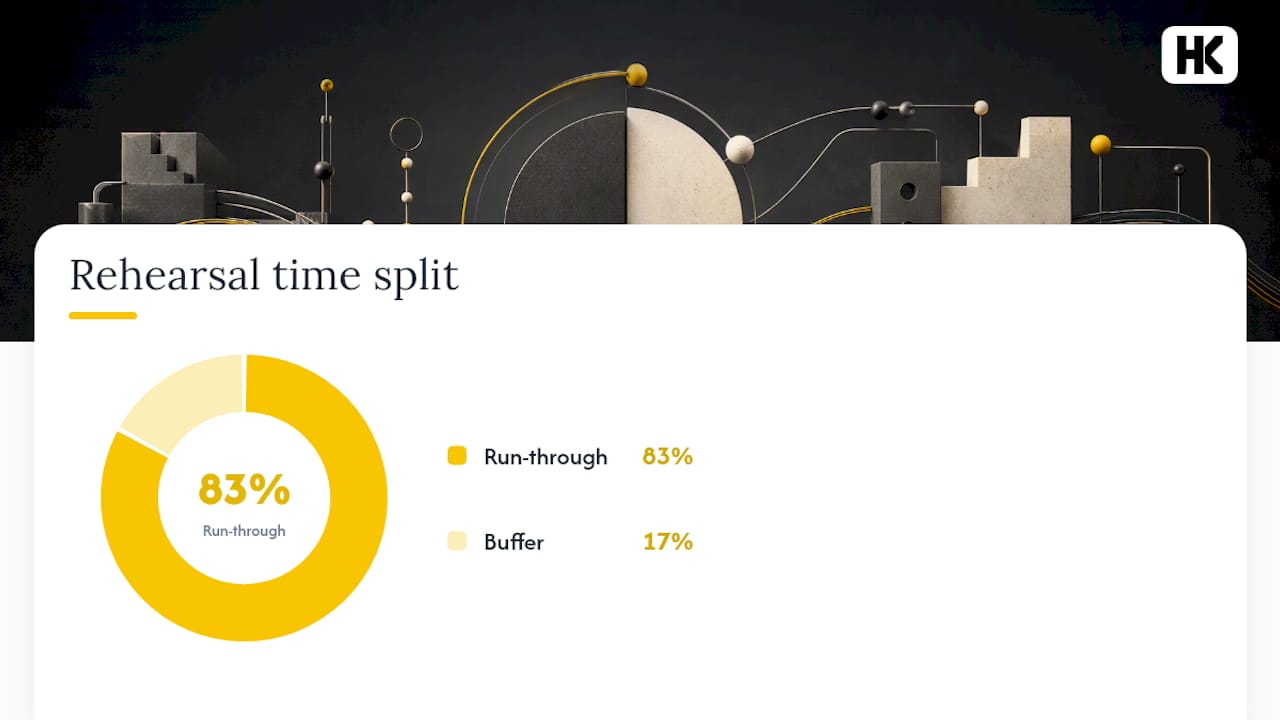
Time yourself. Thirty minutes total, five minutes of buffer for questions.
Stage your virtual data room the same way: one folder per artifact type (architecture, security, IP, CI), a one-line README at the top of each folder explaining what's inside, and the owner's name and last-updated date on every document. Organizing the data room this way cuts review time because nobody has to ask where anything is.
Pro Tip: Have someone with zero context on your codebase sit through your rehearsal. If they're confused by minute ten, your real reviewer will be too.
My Practical Priorities When I Run a Prototype Audit
When I audit a stalled prototype, I don't start with the code that looks worst. I start with the code that costs the most if it's wrong: payment flows, authentication, and anything touching user data. That's where a founder gets burned in a review, not in a slightly messy utility file nobody ever opens.
Second priority: secrets and IP. I've found API keys sitting in git history from tools like Lovable or Bolt that were never rotated, and contributor agreements that simply don't exist because the founder built fast with a freelancer and a handshake. Both are fixable in days, and both are the kind of thing that kills trust instantly if a reviewer finds them first.
A Prototype Audit runs three to five days and delivers an architecture page, a dependency scan, fixes on the worst hot spots, and a runbook snapshot. What it won't do is turn a fundamentally broken data model into something scalable. That's a rebuild, not an audit, and I'll tell you plainly which one you actually need before you pay for either.
Building Your Technical Debt Register
A technical debt register is a short document, not a confession. It lists known issues by severity, the impact if left alone, and a remediation plan with a rough timeline. Reviewers expect debt in any real codebase. What worries them is debt nobody mentioned.
Separate normal startup shortcuts from actually risky debt. A missing test suite on an internal admin panel is normal. A payments integration built without idempotency keys, where a network retry could double-charge a customer, is risky and needs a remediation date attached, not just an acknowledgment.
Format it as a simple table: issue, severity (critical, moderate, low), business impact in one sentence, and planned fix date. Three or four honestly documented critical items with real remediation plans read as far more credible than a register claiming zero debt, which no reviewer believes anyway.
Showing the plan, not just the fixed items, is what separates a founder reviewers trust from one they keep probing. An honest, prioritized remediation plan signals you actually understand your own system, which matters more to most reviewers than a spotless codebase that seems too convenient to be true.
Documenting Your Deployment and Rollback Story
Reviewers want to see staging and production kept separate, with a clear promotion path between them. If your prototype deploys straight from a local machine to production with no staging environment, say so and explain your plan to fix it. That's a common gap in early no-code and AI-assisted builds, not a disqualifying one, as long as you're upfront about it.
Document three things: how a deploy happens (manual click, or an automated pipeline), what environment variables differ between staging and production, and what the rollback procedure looks like if a deploy breaks something. A rollback plan that amounts to "redeploy the previous git commit" is fine, as long as it's written down and someone has actually tested it once.
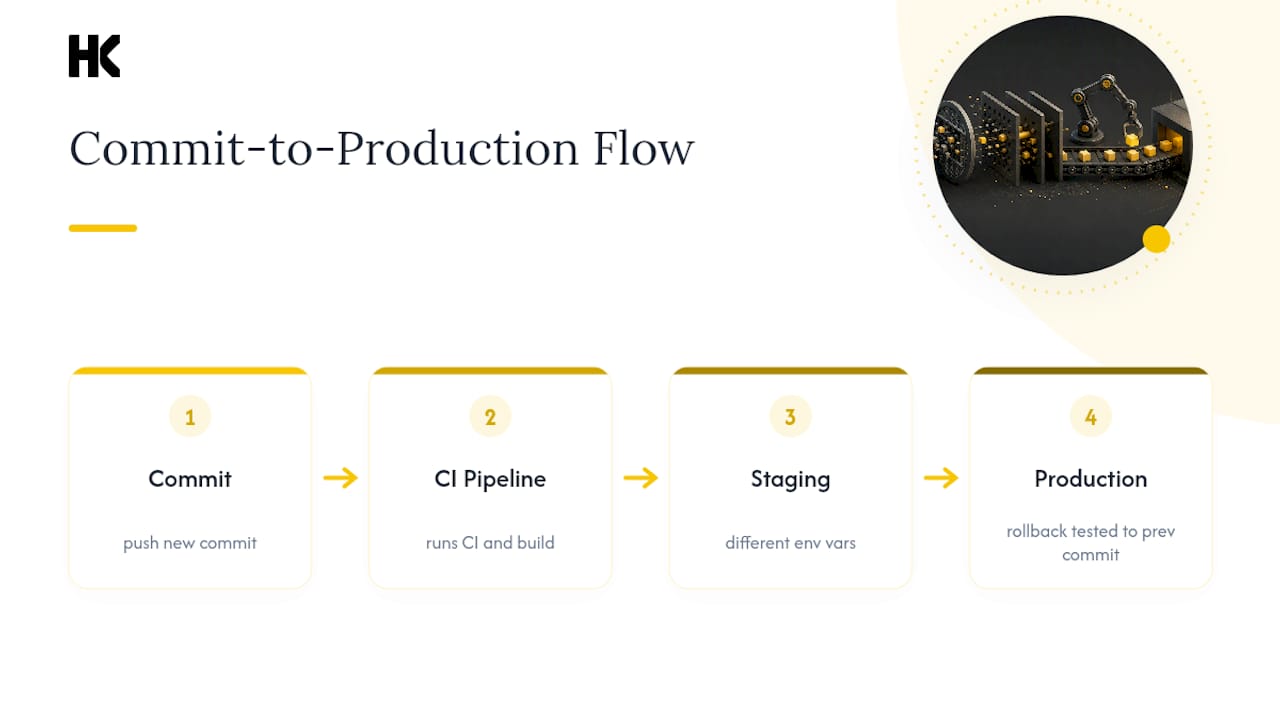
Screenshot your deployment pipeline in action. If you use Vercel, Cloudflare Workers, or a similar platform, a screenshot of a recent successful deploy plus the rollback option visible in the dashboard tells a reviewer more in five seconds than a paragraph of explanation. Pair it with your CI evidence from earlier so the full pipeline, from commit to production, reads as one coherent story rather than three disconnected tools.
On Call History: What Reviewers Actually Want to See
You don't need a formal on call rotation to pass this check. You need evidence that when something broke, someone noticed and fixed it, and that the fix is written down somewhere.
Keep a short incident log: date, what broke, how long it took to notice, how it was fixed, and what changed afterward to prevent a repeat. Three or four honest entries beat a claim of zero incidents, which reads as either lucky or unmonitored.
Attach your runbook here too: the steps someone follows when the app goes down, who gets paged (even if that's just you, right now), and where the logs and monitoring dashboards live. If you're using a tool like Sentry or a basic uptime monitor, name it and show a screenshot of an alert firing and getting resolved. That single artifact, an incident actually caught and closed, does more for trust than a polished document claiming perfect uptime nobody can verify.
Scalability and Performance: What Reviewers Actually Check
Nobody expects a two-month-old startup to have load-tested for a million users. Reviewers check something narrower: does the current architecture have an obvious ceiling, and do you know where it is?
Look for the classic bottlenecks first. A single database instance with no read replicas, a serverless function with a cold-start problem on your most-used endpoint, or a synchronous call to a third-party API sitting in your critical checkout path. None of these are disqualifying at seed stage. Not knowing they exist is the actual red flag.
Document your current load in plain numbers: requests per day, peak concurrent users, average response time on your slowest endpoint. Then write one paragraph on what breaks first if traffic grows ten times over, and what you'd do about it. That's a more credible answer than vague reassurance about being "built to scale," a phrase that tells a reviewer nothing and usually means the opposite.
Compliance: What Founders Consistently Miss
Compliance gaps rarely kill a deal outright, but they slow it down badly when nobody's documented them ahead of time. Start with data residency: where is customer data stored, and does that match what you've told customers in your privacy policy?
GDPR applies the moment you have European users, regardless of where your company is incorporated. Document your legal basis for processing personal data, how long you retain it, and whether you've got a data processing agreement with every third-party vendor touching that data, including your hosting provider and any analytics tool.
If you handle payment card data directly rather than through a processor like Stripe, PCI compliance becomes relevant fast, and most early-stage teams should avoid touching raw card numbers entirely for exactly this reason. Note any regulatory requirement specific to your industry, healthcare, financial services, whatever applies, and state plainly where you currently stand versus where you need to be. A gap with a plan reads fine. A gap nobody mentioned reads as a liability someone else will have to manage later.
Evaluating Your Own Team's Technical Capability
A reviewer isn't just checking the code. They're checking whether the people who wrote it can keep maintaining it, or whether the company would collapse technically if one person left tomorrow.
Map who wrote what. If your entire backend lives in the head of one contractor who's no longer responsive, that's a concentration risk worth naming before someone else finds it. Document each contributor's role, their current involvement, and who could realistically take over their work if they left.
Be honest about skill gaps too. If your prototype was built primarily through an AI coding tool with limited engineering oversight, say so, and pair that admission with a plan: bringing in a senior engineer for a rebuild, or hiring someone who can own the codebase long term. Reviewers have seen enough AI-assisted prototypes by now to expect this conversation. Pretending the code was written the traditional way when it wasn't erodes trust the moment a reviewer opens the repo and the structure gives it away.
Is Your Documentation Actually Usable by a Stranger?
Documentation completeness gets checked one way: can someone with zero context clone the repo and get it running without messaging you six times.
Test this yourself on a fresh laptop, or better, hand it to someone who's never seen the project. Write a setup script, include a sample environment file with placeholder values, and list every external service the project depends on (database, payment processor, email provider) with a note on how to get test credentials for each.
Beyond setup, document intent, not just mechanics. A README that lists commands but never explains why the project is structured the way it is leaves a reviewer guessing. One paragraph per major module explaining its purpose, written for a future engineer rather than for search engines or investors, does more for the overall trust picture than a long document nobody reads. Accessibility matters too: put documentation where a reviewer will actually look, inside the repo itself, not scattered across a Notion page, a Google Doc, and someone's memory.
Where the Standard Advice on This Gets It Backwards
Most due diligence guides tell founders to fix the code first and document it second. I'd argue that's exactly backwards for anyone running on a tight timeline. A reviewer forgives a rough file they can see you already flagged in your debt register. They don't forgive a surprise: an undocumented gap, an unsigned IP assignment, a secret sitting exposed in git history that nobody mentioned until they found it themselves.
The conventional checklist also treats every artifact as equally urgent. It isn't. The IP ledger and the secrets sweep protect you from the two things that actually kill deals: legal ambiguity and a live security incident discovered mid review. Coverage percentages and architecture polish matter, but they're second-order concerns compared to those two.
If you take one thing from this: spend day one on the IP ledger and the secrets sweep, not on making the code prettier. Everything else can be explained, documented, and defended in a conversation. A missing signature or an exposed key can't be talked around.
— Hanad Kubat
If You Prefer Help: My Prototype Audit and Rebuild Work
If your prototype was built in Lovable, Bolt, v0, Bubble, or a similar tool and you're staring down a review you're not confident it'll survive, that's exactly the gap I work in. A Prototype Audit runs three to five days, and it's credited against a build if you continue: I go through the codebase myself, produce the architecture page, run the dependency scan, fix the worst hot spots, and hand you a runbook snapshot along with an honest remediation list.
If the audit shows you need more than patching, a rebuild runs from a fixed price, delivered in weeks, with the code yours from the first commit. Before reaching out, have three things ready: repo access, a list of everyone who's contributed code, and your target timeline. Start with the Hanadkubat and I'll tell you plainly whether you need an audit or a rebuild.
Sources
- Why IP assignment agreements are essential for startup founders — Sandberg Phoenix
- Technical due diligence for startups: what founders should check before investors do — White Internet (Fractional CTO)
FAQ
What Is a Software Due Diligence Checklist?
It's the set of concrete artifacts (architecture diagram, dependency and license report, security summary, IP ledger, test evidence, and runbook) a founder assembles so a reviewer or new developer can evaluate the codebase quickly and trust what they find.
How Long Does It Take to Prepare for Technical Due Diligence?
Most founders can assemble the core artifacts in about two weeks of focused work, following a staged plan that tackles architecture and IP first, then dependency and security scans.
What Happens if a Contributor Never Signed an IP Assignment?
Document the gap honestly in your IP ledger, note any attempts made to obtain the signature, and involve legal counsel before the review starts rather than after someone asks.
Do I Need a Full Pentest or Is an Automated Scan Enough?
Automated dependency and secrets scans cover most early-stage needs; a full pentest becomes worth the cost once you're processing real payment or health data at meaningful scale.
Can a Non-Technical Founder Prepare This Checklist Alone?
Parts of it, like the IP ledger and incident log, yes. The architecture diagram, dependency scan, and secrets sweep are faster and more reliable when a senior engineer runs them, which is exactly what a fixed-price Prototype Audit is built to deliver.